

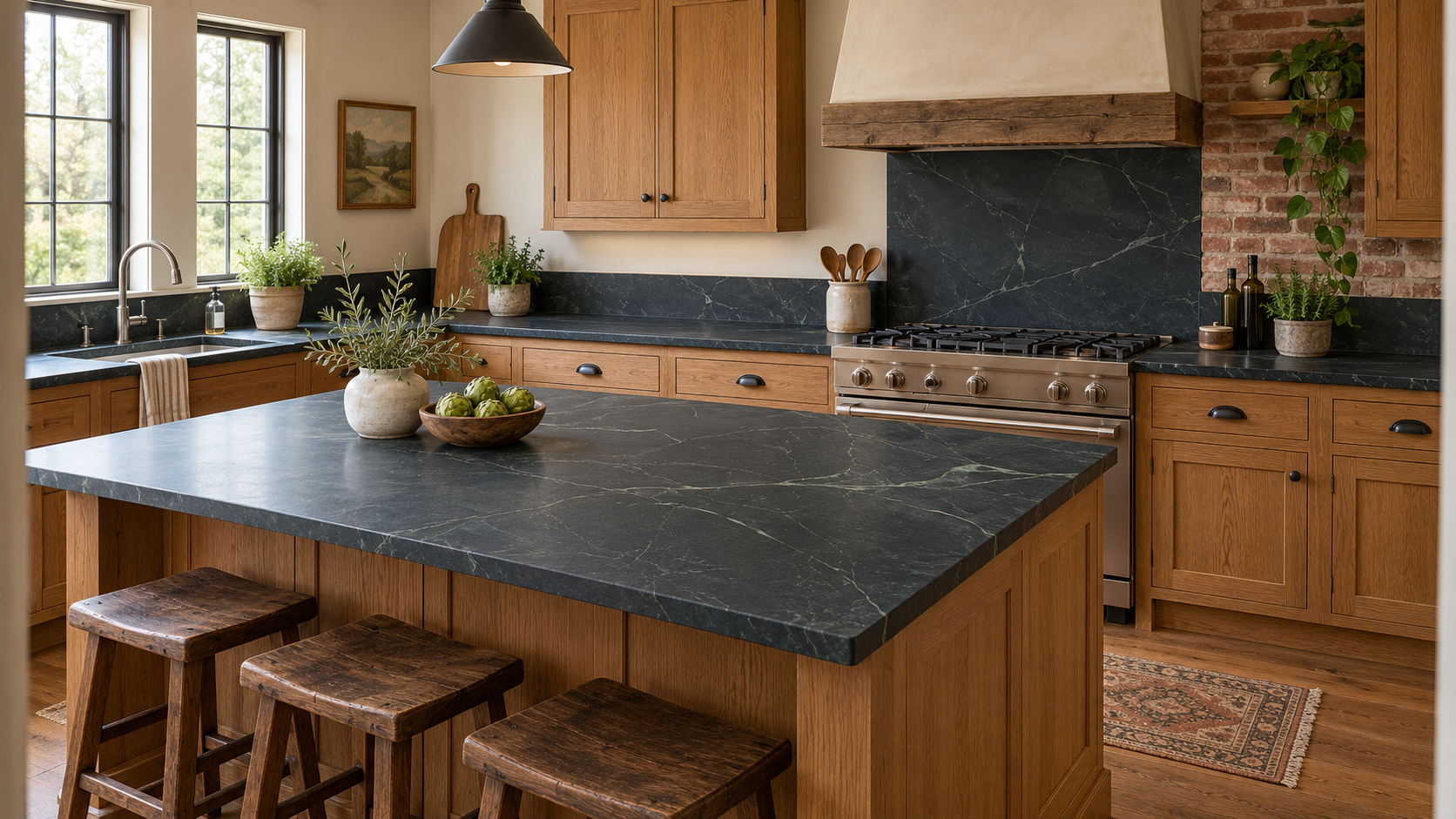
Soapstone kitchen countertops suit rustic spaces because their muted finish and natural pattern work well beside wood cabinets and textured materials. The stone can take on a lived-in look that works with an older farmhouse or a newer kitchen built around the same warmth.
It also offers low absorption without routine sealing, though the surface can scratch. Choose it with both today’s look and the way your kitchen will age in mind.
Why Soapstone Works With Rustic Kitchen Materials
Soapstone brings a lower-sheen surface to a room that may already have visible wood grain or textured brick. Its pattern can add detail without asking every finish to draw equal attention.
Soapstone ranges from gray to charcoal, with green or blue-gray undertones in some stones; seeing the actual slab helps you judge both color and veining.
- With warm wood cabinets, compare the stone’s undertone against the wood itself. Gray soapstone can provide contrast to honey-colored cabinetry, while a green-toned selection creates a different relationship with the same finish.
- With cream or painted cabinets, look at the amount of contrast you want. Darker soapstone can define the countertop line clearly. A lighter, untreated appearance may create a gentler transition from cabinet to counter.
- With brick or patterned flooring, consider a quieter slab if you want those existing materials to remain the main source of texture. A subtle countertop pattern keeps the counter from adding another strong design element.
Daylight changes each pairing: a dark counter near a broad window can look quite different from the same stone beneath upper cabinets. Our guidance on coordinating countertops with cabinetry can help you compare finishes as part of the whole kitchen.
Rustic design leaves room for both light and dark surfaces. Choose the balance that fits your room rather than assuming soapstone needs to look nearly black.
What Living With Soapstone Is Like
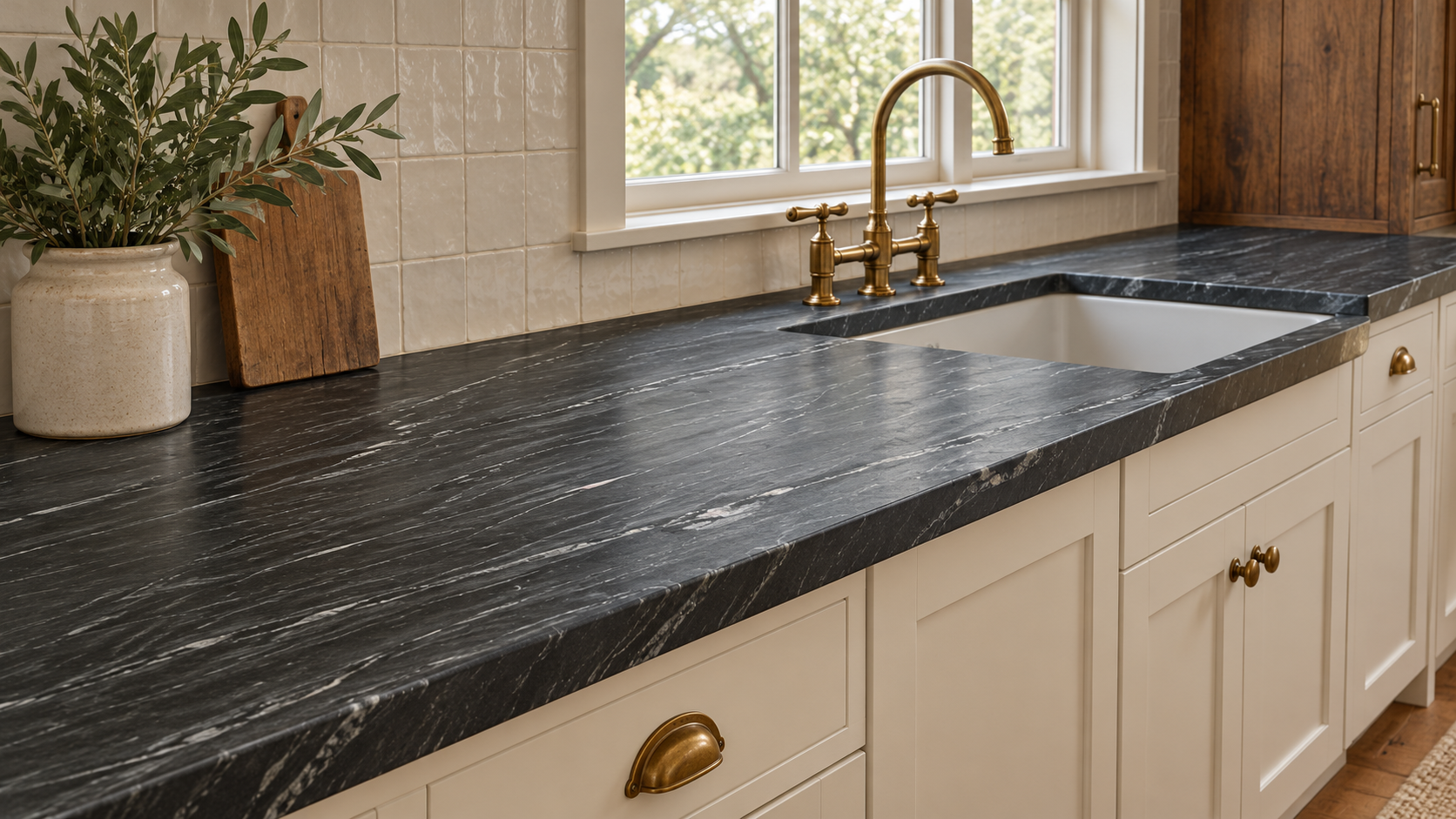
Soapstone offers simple daily care and does not require sealing because it takes in very little liquid, unlike more porous stones.
Most spills stay on the surface rather than soaking in.
Wipe them up and clean with mild soap and water or a product recommended for the stone. Low absorption is useful in a working kitchen, but it does not remove the need to clean food residue.
Oiling is a choice to achieve a specific look. Mineral oil or a suitable wax can deepen the color and bring out veining. These treatments do not provide the nonporous quality; that comes from the stone itself.
You can leave soapstone untreated if you prefer its lighter look. Areas exposed to handling or cooking oils may take on a different look with use. Ask how the actual stone looks untreated and after a suitable treatment before deciding which you prefer.
Softness is a separate consideration. Soapstone contains talc and can scratch or dent more readily than harder countertop stones. A dragged object or rough contact can leave a visible mark, even though the surface resists liquid absorption well.
Some homeowners like the wear that develops; others prefer a surface whose look stays more even. Neither preference is wrong. Cutting boards and careful handling help reduce marks, and your stone fabricator can advise on care if a mark needs work.
Soapstone also has strong heat resistance.
Trivets remain a practical habit for hot cookware, especially near seams or treated areas. Follow the care guidance for your finished counter rather than testing its limits.
Look at photos of soapstone after regular use as well as newly finished stone. That gives you a clearer idea of the changes to expect.
How to Choose Soapstone for Your Kitchen
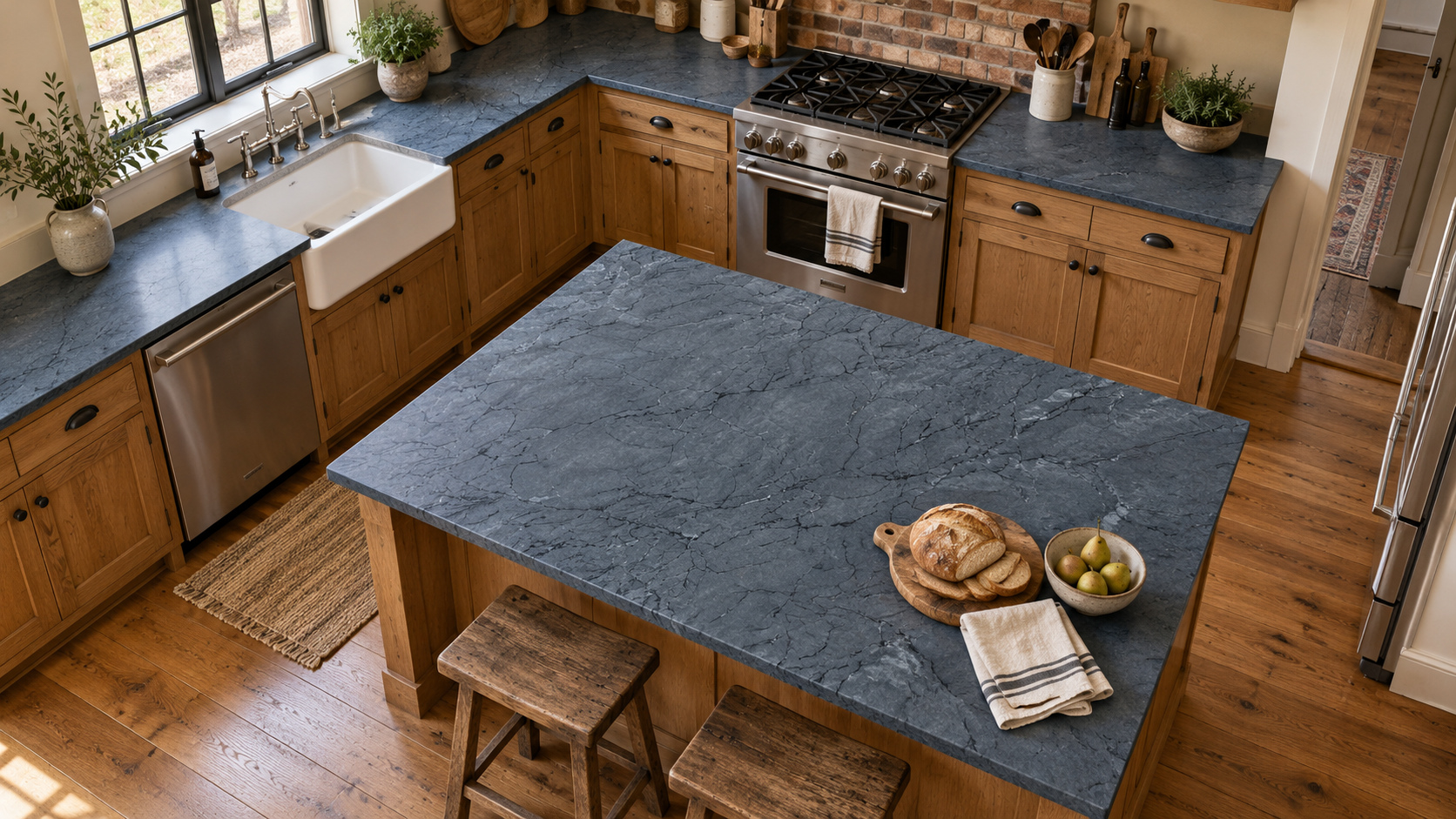
Bring a cabinet door or finish sample into the decision rather than trying to recall the exact shade of the wood. Include flooring and paint references to see how they work with the stone.
Compare the sample where the countertop will sit, including under any upper cabinets, and look again in the evening. This helps you judge whether the surface gives you the contrast you want throughout the day.
Our farmhouse countertop renovation story shows how existing wood finishes can guide a material and color discussion. The same approach helps you see how soapstone works with the rest of the room.
When discussing a selection, ask:
- What soapstone options are available for this project?
- Can I compare the untreated appearance with an approved oil or wax treatment?
- How will the slab dimensions affect seams in my layout?
- Which edge details and support requirements suit the design?
Keeping your cabinets can preserve the look you enjoy, provided their condition and strength give the new countertop the support it needs.
You can explore our natural stone options as a starting point, then discuss soapstone availability with us. Review the particular stone and installed plan before deciding, since a photograph cannot establish either one.
Find a Natural Stone That Suits Your Rustic Kitchen
A countertop choice should make sense beside the finishes you plan to keep and with the care routine you want. We can help you discuss the look and care of soapstone, then compare it with other stones.
Lakeside Surfaces serves homeowners across Michigan’s Lower Peninsula. Our in-house team handles laser templating, custom fabrication, and professional installation, connecting the selection process with the finished work.
Book a free in-home consultation to discuss natural stone options for your rustic kitchen, including available soapstone selections.
Frequently Asked Questions
Does soapstone need to be sealed?
Soapstone used for counters does not require sealing because it takes in very little liquid. That makes its care different from a porous stone that benefits from an impregnating sealer. Check the care guidance for the stone and finish you choose. Cleaning is still necessary, and a surface treatment used to change the color serves a different purpose from protective sealing.
Do soapstone countertops have to be oiled?
No. Oil or wax is optional; a suitable treatment can deepen the color and bring out the veining. Leaving the stone untreated preserves a lighter look initially. The look can change with use in either case. Ask which products suit your stone and what to expect before you settle on a routine.
Will soapstone countertops scratch?
Soapstone scratches more easily than quartzite and most other natural stone, so careful handling matters even though it takes in little liquid. Use cutting boards and avoid dragging rough objects across the counter. If a mark needs attention, ask your fabricator about suitable care rather than applying an abrasive or trying an unfamiliar repair method.
Will soapstone make a rustic kitchen look too dark?
Not necessarily. The stone’s tone and treatment affect its appearance, as do the cabinets and available light. A dark countertop can work well beside cream paint or warm wood, while a lighter untreated selection gives a different effect. Compare samples under your kitchen lighting and consider how much countertop area the room contains before choosing the overall contrast.